Email:
loa14@sfu.ca

Lauren Ajaero

LinkedIn:
www.linkedin.com/in
/lauren-ajaero


The What

The How

The Results

Run-of-River Hydropower System Analysis

The goal of this project was to design a small-scale run-of-river hydro-electric power system that can provide reliable and predictable 100kW of electrical power to remote and off-grid facilities in many locations in British Columbia. It also includes a final report on the final design configurations, environmental effects, hazard and risk assessment, and a cost-assessment on the return of investment.
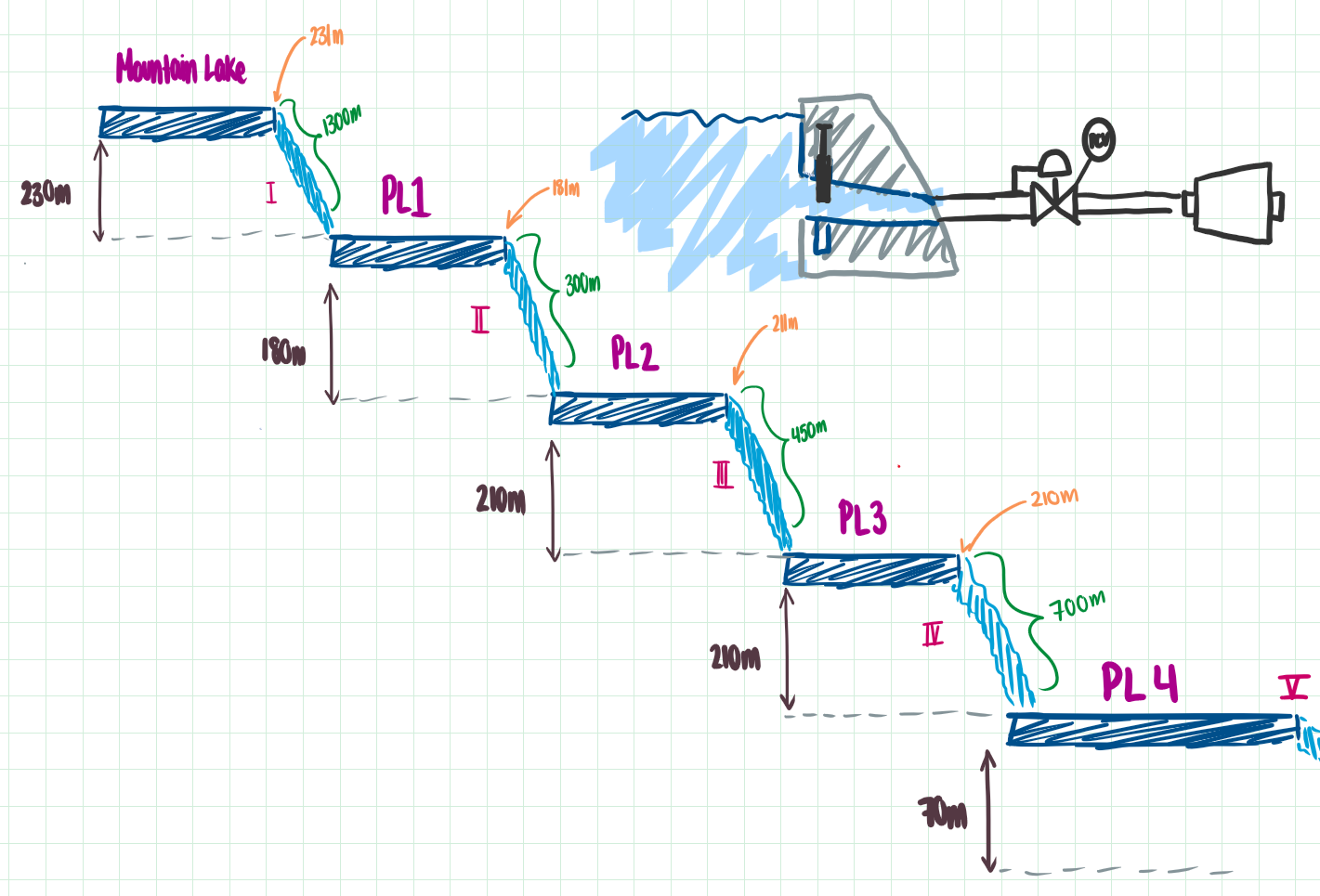
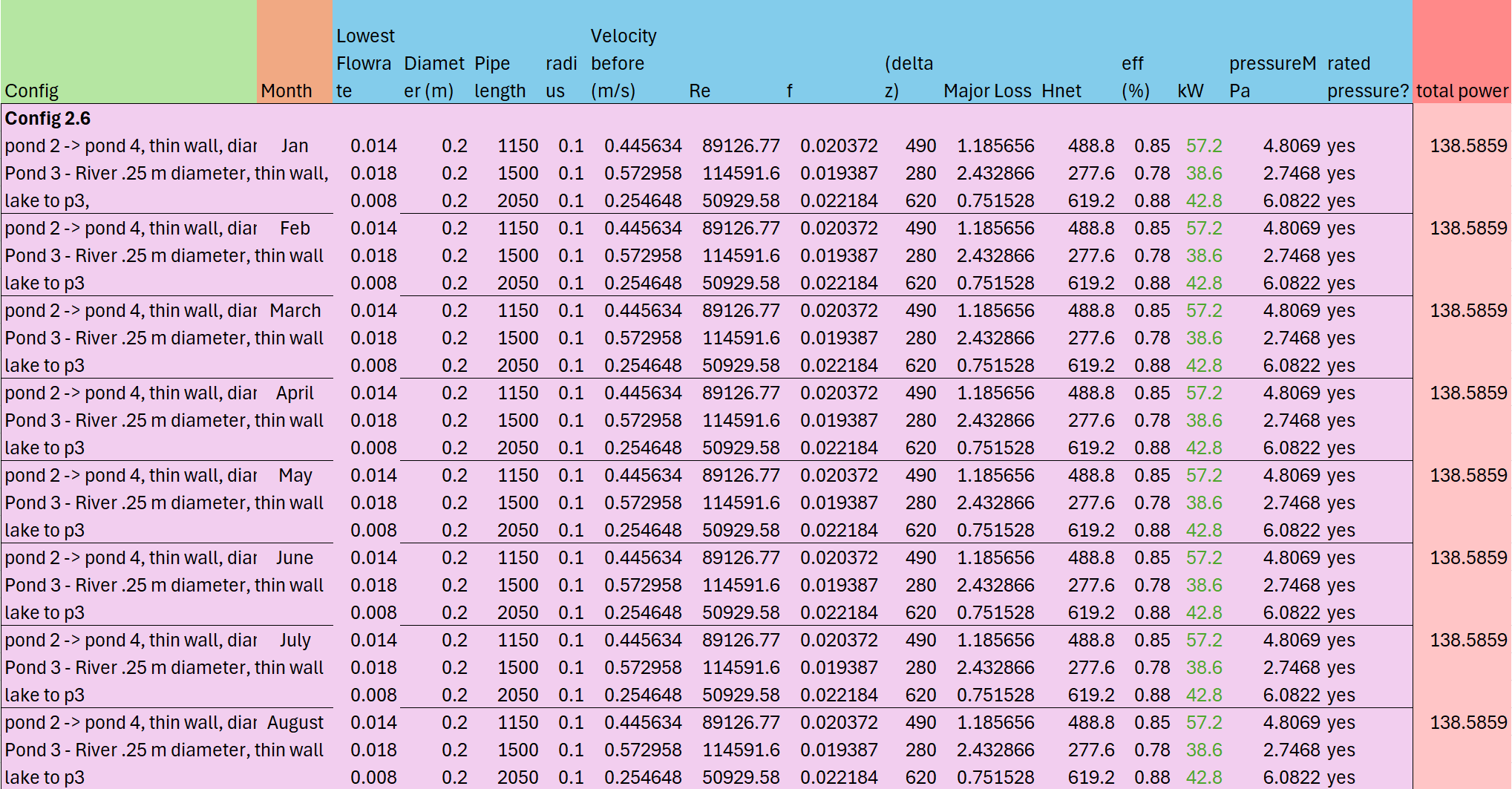
Using Microsoft Excel sheets, multiple configurations of different pond inputs were tested for feasibility. Ones that could provide to 70-100+ kW each month where examined in more detail. Parameters such as friction factor, head, flow rate, and cost were optimized with changes in material, diameter, and piping length.
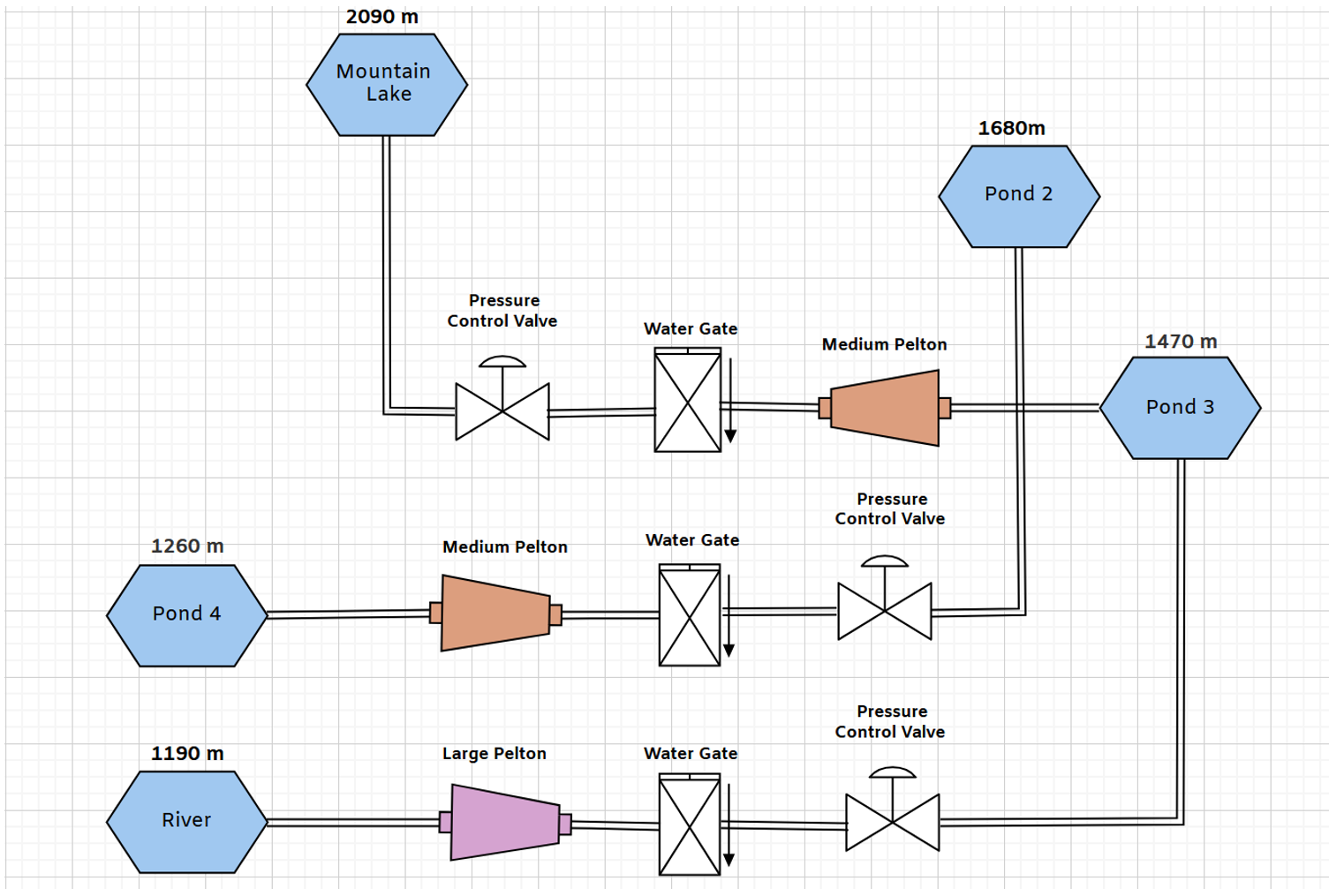
Supplied 100kW of electrical power each month and successfully accommodated for each month in a drought year where all water flow drops by 40%.A Piping and Instrumentation Diagram (P&ID) was developed to map system architecture, verifying system safety and compliance; Pipe pressure was kept to a minimum at 4.12MPa, 55% below maximum rated pressure. Additionally, a bill of materials (BOM) was created and maintained to evaluate and compare capital costs across final designs. Illustrated the avoided diesel dependency; Calculated results that showed an estimated $876,000 in annual fuel savings while also preventing the release of approximately 644.7 Tonnes of CO2 each year.

Pumped Hydropower Storage System

The goal of this project was to design an interactive, portable hydropower demonstration unit to showcase the Sustainable Energy Engineering program's core themes at high school recruitment events. The design constraints required the physical assembly to strictly fit specific spatial limits for ease of transport and remain within a tight budget while remaining highly engaging and informative for a high school student audience.

The complete circuit design was developed and simulated within the Wokwi ecosystem to verify the C++ code and to test hardware integration before building the physical prototype. The system featured a two-reservoir pumped hydroelectric storage setup equipped with a turbine flow sensor that generated electrical pulses from water flow; a connected Arduino decoded these pulses into real-time flow rate data and executed Arduino C++ control logic to sequentially light up a responsive power-status LED interface during flow acceleration and power them down when flow decreased.

The completed project concluded with a live technical demonstration and an engaging presentation delivered to a classroom of prospective high school students. The final physical prototype delivered a highly responsive, three-color LED layout that mapped active turbine flow with zero false-positive triggers and a fast response time on presentation day.

SOLIDWORKS Stapler Modelling and Redesign

The objective of this project was to engineer a precise digital twin of a commercial Amazon Basics stapler and successfully execute a redesign of one of it's component to improve it. The project required maintaining the stapler's familiar form factor and full mechanical functionality

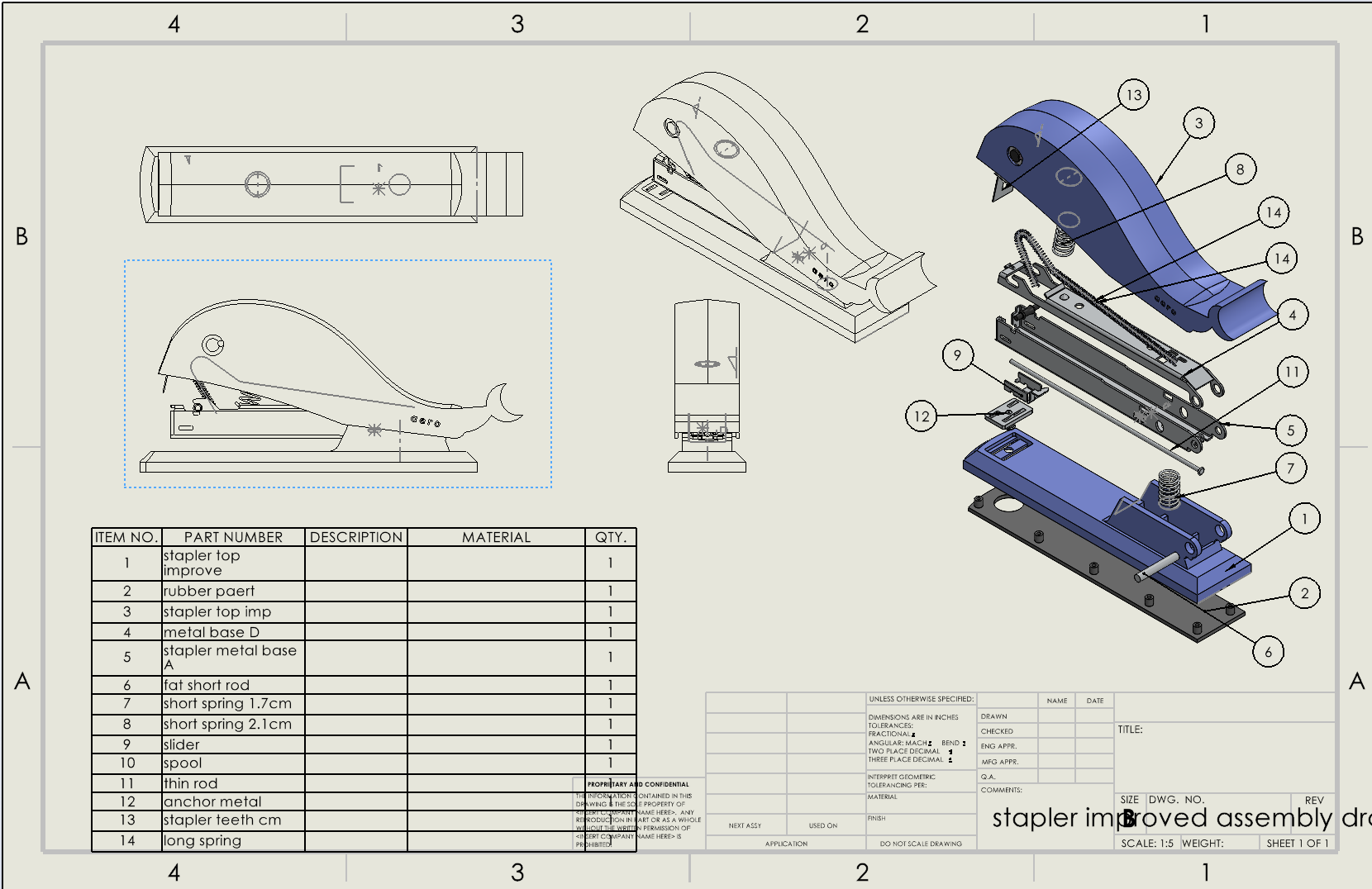
The physical stapler was carefully disassembled into individual components, with each part meticulously measured to scale. These components were then modeled from scratch as 3D parts within SOLIDWORKS and compiled into a master SOLIDWORKS Assembly using geometric and mechanical mates to replicate the true physical motions of the physical version.

The final package included detailed 2D orthographic standard multi-view drawings and an itemized Bill of Materials (BOM) to define manufacturing tolerances and production requirements. Redesigned the shell of the stapler to a cute aesthetic to pander to a younger audience while still keeping it's familiar form and functionality. To showcase the final product, renders of the original and redesign were made in SOLIDWORKS Visualize.